
Mario
The Complete Guide to Mario Games: From Classic Platformers to Modern Adventures
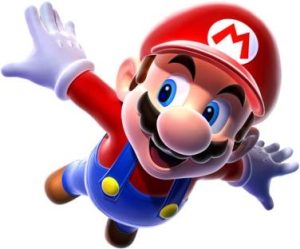
For over three decades, Mario has stood as the undisputed king of gaming. From his humble beginnings in 1985 to his current status as a global cultural icon, Mario has captured the hearts of millions across generations. Unlike “unblocked” versions of Mario games found on third-party sites, official Mario games are available through Nintendo consoles, PC, and mobile devices, offering authentic gameplay experiences directly from the source.
The Evolution of Mario: A Journey Through Time
The Super Mario franchise has grown from a simple 2D platformer into a sprawling universe encompassing dozens of titles across multiple genres. Understanding Mario’s evolution helps players appreciate the rich history behind the world’s most beloved plumber.
The 8-Bit Era: Where It All Began
Super Mario Bros. (1985) revolutionized the gaming industry. Players step into the overalls of Mario, the iconic Italian plumber, on a heroic quest through the Mushroom Kingdom to rescue Princess Toadstool from the villainous Bowser . The core gameplay involves navigating vibrant landscapes, evading Bowser’s forces, collecting coins, and hitting special “?” blocks that reveal valuable power-ups .
A key element of the original game is the transformation mechanic. After eating a Super Mushroom, regular Mario transforms into Super Mario, doubling in size and gaining the ability to smash bricks above him. If hit in this powered-up state, he shrinks back to his normal form but survives the encounter .
The game’s influence on the medium as a whole is undeniable, shaping platformers for decades to come .
The 16-Bit Masterpiece
Super Mario World (1990) for the Super Nintendo Entertainment System (SNES) expanded the formula significantly. Set in Dinosaur Land, this title introduced Yoshi, Mario’s trusty dinosaur companion . Players can control Mario or Luigi as they run, jump, and spin through various stages, with the ability to ride Yoshi to navigate terrain and defeat enemies .
What makes Super Mario World special is its interconnected world map, secret exits, and diverse level designs ranging from lush forests to treacherous castles . The game remains a must-play for fans of retro platformers, offering tight controls and creative level design that set the standard for future installments .
The Nintendo 64 Revolution
Super Mario 64 (1996) marked Mario’s transition to 3D, fundamentally changing how players experienced the Mushroom Kingdom. The game introduced mechanics like triple jumps, side flips, and wall kicks—movement options that are now standard in 3D platformers . Many of these innovations debuted earlier in Donkey Kong ’94 on Game Boy, but Mario 64 polished them into a cohesive 3D experience .
The Modern Era
Recent years have seen Mario evolve with the times while staying true to his platforming roots.
Super Mario Wonder (2023) is considered an essential title for newcomers and longtime fans alike . It introduces fresh mechanics that differentiate it from the New Super Mario Bros. series, which many fans consider formulaic in comparison . The game features a magical world with unique level mechanics, interactive environments, and creative platforming challenges .
The New Super Mario Bros. series, particularly New Super Mario Bros. Wii, is notable for shaping the aesthetic of the franchise throughout the 2010s and much of the 2020s . It’s considered by some to be the quintessential modern Mario experience, though opinions vary on its place alongside Wonder .
Beyond Platforming: The Mario Universe Expands
Mario isn’t just about jumping on Goombas anymore. The franchise spans numerous genres and formats.
Mario Kart Series
The Mario Kart franchise began with Super Mario Kart (1992) on the SNES. While the original is quite different from its sequels, Mario Kart 64 (1996) is credited with shaping the modern series . For the definitive experience, Mario Kart 8 Deluxe on Nintendo Switch offers the most polished and content-rich package in the series .
Mario Party Series
Mario Party Jamboree represents the modern evolution of the party game franchise . These titles offer competitive and cooperative mini-games that are perfect for social gaming sessions.
Paper Mario and Mario & Luigi RPGs
Paper Mario: The Thousand-Year Door (2004) remains a beloved entry in the RPG sub-franchise . Its remake on Nintendo Switch introduced the charming world of paper-thin characters to a new generation. These games offer a distinct experience from mainline platformers, focusing on storytelling, turn-based combat, and humor.
Mario Sports Games
The Mario universe extends to sports, with titles like Mario Tennis 64, Mario Golf: Toadstool Tour, and Mario Basketball offering fun, accessible sports gameplay with Mario characters .
Educational Mario Games
Between 1988 and 1996, a series of educational Mario spin-offs were released. While Nintendo didn’t develop most of these games directly, they featured Mario characters in learning-focused contexts .
Mario Teaches Typing (1992) stands out as one of the earliest official Mario titles for personal computers . Developed by Interplay Productions under license from Nintendo, the game features four progressively challenging typing exercises where players control Mario, Luigi, or Princess Toadstool . Players type letters, words, or sentences to navigate obstacles and defeat enemies in Mushroom Kingdom environments .
The game included adjustable words-per-minute goals, selectable keyboard rows for focused practice, and printable certificates upon completion, making it suitable for school use . Notably, the 1994 CD-ROM release featured Charles Martinet as the voice of Mario, marking his debut in the role and influencing the character’s portrayal for decades .
Mario Is Missing! (1993) teaches geography, as Luigi must rescue Mario and return stolen artifacts to cities around the world . Mario’s Time Machine (1993) involves Bowser stealing historical items and Mario traveling through time to return them . The Mario’s Early Years! series (1994) focused on letters, numbers, and preschool skills .
Mario’s Game Gallery includes five classic board games with a Mario twist, and notably features Charles Martinet’s first voice performance as Mario .
Fan-Made Mario Experiences
The Mario fandom has created numerous creative interpretations of the classic formula. Jelly Mario Bros reimagines Mario with surreal, gelatinous physics where every jump, run, and stomp feels elastic and unpredictable . The game maintains the classic goal of navigating levels and reaching Bowser’s castle, but the physics add a playful, wobbly challenge . It’s a browser-based HTML5 project that requires no installation .
Mario Madness takes the series in a darker direction, functioning as a top-down shooter where players battle Goombas and other enemies . It was created for a weekly game jam and demonstrates the creative breadth of fan content.
How to Play Mario Games
Official Nintendo Platforms
Authentic Mario games are available through:
Nintendo Switch – Home to most modern Mario titles including Super Mario Odyssey, Super Mario Wonder, Mario Kart 8 Deluxe, and Super Mario Bros. Wonder
Nintendo 3DS – Features classics like Super Mario 3D Land and New Super Mario Bros. 2
Virtual Console – Older titles available on Wii, Wii U, and 3DS Virtual Console services
Nintendo Switch Online – Offers classic NES, SNES, and N64 games including original Mario titles
PC and Mobile Options
While mainline Mario games are Nintendo exclusive, some titles are available on other platforms:
Mario Teaches Typing and its sequel were released for MS-DOS and Windows PCs
Various fan-made and educational games have PC versions
Super Mario Run is available on iOS and Android (official Nintendo mobile title)
Browser-Based Versions
Several fan-created Mario games and interpretations are available for free in web browsers without downloads or installation . These include:
Super Mario World Online – A faithful recreation of the SNES classic
Super Mario Bros Classic – Browser-based version of the original
Super Mario Wonder – A fan-made clicker/platformer hybrid
Jelly Mario Bros – A physics-based fan interpretation
Super Mario Endless Run – An arcade-style endless runner
These browser games typically use HTML5 technology and work on desktop, mobile, and tablet devices . However, they are not official Nintendo products and may not be authorized by the company.
FAQ: Your Mario Questions Answered
Q: What is the first Mario game?
A: Mario first appeared in Donkey Kong (1981) as “Jumpman.” The first game titled “Super Mario Bros.” was released for the NES in 1985.
Q: What are the best Mario games for newcomers?
A: Essential Mario games for newcomers include Super Mario Bros. (to understand the series roots), Super Mario World, Super Mario 64, and Super Mario Wonder for a modern experience . Mario Kart 8 Deluxe and Paper Mario: The Thousand-Year Door are also recommended for variety .
Q: What’s the difference between Super Mario Wonder and New Super Mario Bros.?
A: Super Mario Wonder introduces new mechanics and creative level design that many consider superior to the more traditional New Super Mario Bros. series . The New Super series, particularly New Super Mario Bros. Wii, defined Mario’s aesthetic for the 2010s .
Q: Are Mario educational games worth playing?
A: The educational Mario games from the 1990s are considered dated but nostalgic by modern standards . Titles like Mario Teaches Typing remain interesting as historical artifacts that show Nintendo’s expansion into educational software . However, they may not hold up as engaging learning tools by today’s standards .
Q: Can I play Mario games on PC?
A: Official mainline Mario games are exclusive to Nintendo consoles. However, some educational titles like Mario Teaches Typing were released for PC , and fan-made browser versions are available online for free .
Q: What is Mario’s first appearance?
A: Mario debuted as “Jumpman” in the arcade game Donkey Kong (1981). He was named Mario in subsequent games.
Q: What are the best Mario RPGs?
A: Paper Mario: The Thousand-Year Door and the Mario & Luigi series are widely considered the best Mario RPG experiences . The remake of Paper Mario: The Thousand-Year Door on Nintendo Switch brought the classic to modern audiences.
The Enduring Legacy of Mario
Mario is more than a game franchise – he’s a cultural institution. From the original NES classic to the latest Nintendo Switch releases, Mario has evolved while maintaining the core elements that made him beloved worldwide: tight controls, creative level design, and undeniable charm.
Whether you’re exploring Dinosaur Land in Super Mario World, racing friends in Mario Kart, or discovering magical secrets in Super Mario Wonder, the Mushroom Kingdom always has new adventures waiting. As fans on gaming forums note, the beauty of Mario is that there’s no single “definitive” experience – each era offers something unique, and personal preference plays a huge role in which games resonate most .
Discover more Mario games and adventures at Zazo Games – your gateway to the Mushroom Kingdom and beyond!
Read 12 web pages
The Ultimate Mario Games Guide: Complete Collection, History & Best Titles
For over four decades, Mario has reigned as the undisputed king of gaming. Created by the legendary game designer Shigeru Miyamoto, Mario first appeared as “Jumpman” in the 1981 arcade classic Donkey Kong before being renamed Mario in 1983 . The franchise has since sold more than 400 million units worldwide, transforming a simple plumber into a global cultural icon recognized by people of all ages across every corner of the planet .
But what exactly makes Mario so special? Why does a plumber in overalls with a thick mustache command such loyalty and admiration? The answer lies in Nintendo’s unwavering commitment to innovation, quality gameplay, and the pure joy of discovery that defines every Mario game.
The Complete History of Mario Games
The 1980s: Birth of an Icon
Super Mario Bros. (1985) for the NES revolutionized the video game industry. A small team led by Shigeru Miyamoto and Takashi Tezuka created what remains one of the gold standards of interactive entertainment . The game was born from a desire to feature a larger hero traveling through colorful environments in land, sky, and sea settings . More importantly, Super Mario Bros. played a crucial role in solidifying the video game industry after the North American industry crash of the early 1980s .
The original game introduced iconic elements:
Power-ups – Super Mushrooms, Fire Flowers, and Starmen
Memorable enemies – Goombas, Koopas, and the villainous Bowser
Precision platforming – Tight controls that set the standard for the genre
Secrets – Hidden warp zones and 1-Up mushrooms
Super Mario Bros. 3 (1988) expanded the formula dramatically. It introduced world maps, new power-ups including the Tanooki Suit, Bowser’s children, airships, and the now-iconic theme that forms the DNA for the rest of the series . It was a gigantic cultural event complete with one of the most memorable video game commercials ever created .
The 1990s: 16-Bit Mastery and 3D Revolution
Super Mario World (1990) for the Super Nintendo Entertainment System (SNES) took everything great about Mario 3 and improved upon it . Set in Dinosaur Land, it introduced:
Yoshi – Mario’s dinosaur companion who could eat enemies and flutter jump
Spin-jump – A new move for defeating enemies from above
Save functionality – A welcome feature compared to its NES predecessors
Interconnected world map – With secret exits and hidden paths
Super Mario World 2: Yoshi’s Island (1995) completely changed the formula . This hand-drawn classic features Yoshi caring for Baby Mario after Baby Luigi is kidnapped by Baby Bowser . Though technically a sequel, it launched Yoshi’s own spin-off series while remaining one of the best-crafted platformers of all time .
Super Mario 64 (1996) marked Mario’s transition to 3D and changed gaming forever . It was a turning point that set the blueprint for 3D games for years to come with:
Analog control – Revolutionary for its time
Open-ended stages – Freedom to explore and collect Power Stars
Dynamic camera system – Groundbreaking innovation in game design
Precision moves – Triple jumps, wall kicks, and long jumps
The 2000s: Expanding the Universe
The 2000s saw Mario branch into multiple directions:
Super Mario Sunshine (2002) – Mario’s tropical adventure with FLUDD, a water-powered backpack that introduced unique platforming mechanics.
Super Mario Galaxy (2007) and Super Mario Galaxy 2 (2010) took Mario into space with gravity-defying gameplay . Galaxy 2 is widely considered the best 3D Mario ever made, bringing Yoshi along while expanding concepts from the original .
New Super Mario Bros. series – Starting with the 2006 DS version, this series brought 2D Mario gameplay to modern consoles, with the Wii version (2009) allowing four-player cooperative play .
The 2010s: 3D Masterpieces
Super Mario 3D Land (2011) on 3DS brought 3D gameplay to the handheld format. This led to Super Mario 3D World (2013) on Wii U, the first 3D Mario with true co-op gameplay . The Switch version, Super Mario 3D World + Bowser’s Fury, added online play and a entirely new game called Bowser’s Fury .
Super Mario Odyssey (2017) for the Nintendo Switch introduced Cappy, a living hat that allows Mario to take control of enemies and objects . This creates terrifically varied gameplay where you might play as a T-Rex, a frog, a Goomba, or a Chain Chomp . Odyssey shows Mario’s nipples, which Polygon notes as a memorable highlight !
The 2020s: Wonder and Beyond
Super Mario Bros. Wonder (2023) returned to 2D with astounding critical reception thanks to its creative level design, charming art style, and unpredictable Wonder Effects . Grabbing a Wonder Flower leads to wild changes:
Being shot into space
Transforming into enemies
Musical numbers starring in-stage enemies
The game boasts the largest roster of playable characters and a customizable Badge system catering to preferred playstyles .
Super Mario RPG Remaster – The SNES collaboration between Nintendo and Square Enix got a gorgeous modern remaster, introducing iconic characters like Geno and Mallow to a new generation .
Mario Spinoffs and Expansions
Mario Kart Series
Super Mario Kart (1992) on SNES pioneered the racing genre for Nintendo, using Mode 7 to create a faux-3D effect . The series evolved dramatically with Mario Kart 64 (1996), which shaped the modern Mario Kart experience . Today, Mario Kart 8 Deluxe offers the most polished and content-rich package, available on Nintendo Switch .
Mario Party
Super Mario Party Jamboree brings back chaos and motion controls with an injection of ingenuity that fans had been begging for over the last decade . The visuals are drop-dead gorgeous, and it includes a swanky Switch 2 upgrade .
Mario RPGs
Paper Mario: The Thousand-Year Door is perhaps the oddest and most irreverent game starring Mario, with bizarre, horny, obnoxious, and gloriously silly characters . The remaster is an immaculate recreation of what many fans consider the best Mario RPG .
Super Mario RPG: Legend of the Seven Stars (1996) developed by Square (of Final Fantasy fame) blends traditional adventuring with turn-based RPG battles, even making Bowser an ally .
Educational Mario Games
Between 1988 and 1996, Nintendo released several educational Mario spin-offs:
Mario Teaches Typing – Features Charles Martinet’s debut as Mario’s voice
Mario Is Missing! – Teaches geography as Luigi rescues Mario
Mario’s Time Machine – History-themed educational game
Mario’s Early Years! – Preschool skills in letters and numbers
Mario Theme Parks
Super Mario World theme parks opened in Osaka (2021), Los Angeles (2022), with a planned third in Florida . An augmented reality Mario Kart race around Bowser’s Castle is being considered for the attractions .
Mario in Pop Culture
Japan’s late Prime Minister Shinzo Abe appeared as Mario at the 2016 Olympics handover ceremony for Tokyo 2020, showing Japan’s soft power to the world . Spanish city Zaragoza even named a street “Super Mario Bros Avenue” in 2010 . A sealed Super Mario 64 cartridge sold for $1.56 million in 2021, a record for a video game .
Top 10 Mario Games Ranked
#1: Super Mario World (1990)
Taking the top spot, this SNES platformer improved upon everything great about its predecessors while taking a chance on a new setting . Dinosaur Land offered enormous level variety and glorious 16-bit graphics.
#2: Super Mario Bros. 3 (1988)
A game so anticipated it appeared in a movie before release. It introduced world maps, the Tanooki Suit, and formed the DNA for the series .
#3: Super Mario 64 (1996)
The analog controls, 3D revolution, and dynamic camera blew minds . Still considered one of gaming’s greatest achievements.
#4: Super Mario Odyssey (2017)
Cappy’s possession mechanic transforms each world into a playground where Mario can become a frog, a street delineator, or even a T-Rex .
#5: Super Mario Galaxy 2 (2010)
The best 3D Mario of the new millennium, not limited by terrain or gravity, and bringing back beloved elements from earlier installments .
#6: Super Mario Bros. Wonder (2023)
The long-awaited return of 2D Mario with Wonder Effects that deliver joy around every corner .
#7: Super Mario World 2: Yoshi’s Island (1995)
A beautiful, hand-drawn classic where Yoshi escorts Baby Mario . It’s gotten better with age.
#8: Super Mario RPG: Legend of the Seven Stars (1996)
Square’s collaboration expanded the series cast and even made Bowser an ally .
#9: New Super Mario Bros. Wii (2009)
Brought four-player cooperative chaos to home consoles .
#10: Super Mario Kart (1992)
The original kart racer with Mode 7 faux-3D that started a franchise .
SEO & GEO Optimization for Mario Content
Target Keywords
Primary Keywords:
Mario games
Super Mario
Super Mario Bros
Best Mario games
Long-Tail Keywords:
Super Mario Odyssey Moon locations
Super Mario 3D World power-ups
Mario games on Nintendo Switch
Super Mario Bros Wonder review
Entity Keywords:
Shigeru Miyamoto
Bowser, Luigi, Yoshi
Peach, Toad
NES, SNES, Nintendo 64
Platformer, Mario Kart
GEO/AEO Strategy
To achieve AI visibility with GEO and AEO, focus on first-party data and unique content . AI models value authentic, trusted content delivered consistently . Key tactics include:
Answer questions directly – “What is the best Mario game?” should be answered clearly
Structure content with schema – FAQ, HowTo, and Organization schema help AI parse information
Provide unique analysis – AI can generate generic content, but your rankings and opinions are valuable first-party data
Create expert content – Build trust through experience and expertise
Mario SEO Case Study
The keyword “mario” generates massive search volume (68 million monthly globally) with surprisingly low competition . This indicates a broad keyword where user intent varies greatly – some want Mario Kart, others Mario sports games, others Mario party . Optimizing for narrower but specific long-tail keywords (e.g., “Super Mario Odyssey final boss”) often yields better results than targeting broad terms .
Frequently Asked Questions
Q: What was the first Mario game?
A: Mario debuted as “Jumpman” in Donkey Kong (1981) . He was renamed Mario in 1983, and the first game titled “Super Mario Bros.” released in 1985 .
Q: What are the best Mario games?
A: Critical favorites include Super Mario World, Super Mario 64, Super Mario Odyssey, Super Mario Bros. 3, and Super Mario Galaxy 2 .
Q: What Mario games are available on Nintendo Switch?
A: Available games include Super Mario Odyssey, Super Mario Bros. Wonder, Super Mario 3D World + Bowser’s Fury, Super Mario RPG, Super Mario Party, Mario Kart 8 Deluxe, and many classics through Nintendo Switch Online .
Q: What does GEO and AEO mean for Mario content?
A: Generative Engine Optimization (GEO) and Answer Engine Optimization (AEO) optimize for AI search engines like ChatGPT and Google AI Overviews by providing trusted, structured, and unique information that LLMs can recommend .
Q: Who created Mario?
A: Mario was created by Shigeru Miyamoto, first as Jumpman in Donkey Kong (1981) before receiving his iconic name in 1983 .
Q: What is Super Mario Odyssey about?
A: Odyssey features Cappy, a living hat that can possess creatures and objects, creating diverse gameplay from T-Rexes to frogs .
Q: What is Mario’s cultural significance?
A: Mario is a global icon recognized by people of all ages, featured in theme parks, merchandise, movies, and even a street name in Spain .
Start Exploring Mario Today
Whether you’re a newcomer exploring Super Mario Bros. Wonder, a veteran revisiting Super Mario World, or a completionist collecting every Power Moon in Odyssey, the Mushroom Kingdom has endless adventures waiting. With over 400 million units sold across decades, Mario games offer timeless fun for players of all ages.