





Solitaire





















About game «Solitaire»
Play free Solitaire online! Solve classic card layouts, test your strategy, sharpen your mind, and enjoy one of the most popular card games ever created.
The Ultimate Solitaire Guide: Master the Classic Card Game
♟️ Why Solitaire Remains the World’s Favorite One-Player Card Game
For centuries, Solitaire has captivated players as a timeless pastime for one person. Originating in the Baltic region of Europe near the end of the 18th century, this classic card game initially may have served a purpose in fortune-telling, with a successful game indicating a wish would come true . Known as “Patience” in England, Poland, and Germany, and “Cabale” in Scandinavian countries, the game involves starting with a shuffled deck and attempting, through a series of maneuvers, to arrange all the cards in numerical order, often separated by suit .
The game skyrocketed to global fame in the 1990s when it was included as a software package in Microsoft Windows, introducing millions of people to its digital version . Today, Solitaire (specifically, Klondike) is one of the most enduring and popular card games in history . This comprehensive guide covers everything from the basic rules to advanced strategy, the fascinating history of the game, and its many popular variations.
📝 The Complete Rules of Solitaire (Klondike): From Setup to Victory
The Goal of the Game
In classic Solitaire, also known as Klondike, the objective is to build four foundation piles, one for each suit (Hearts, Diamonds, Spades, Clubs), in ascending order from Ace to King . You win the game when all 52 cards are successfully moved to these four piles .
The Setup and Layout
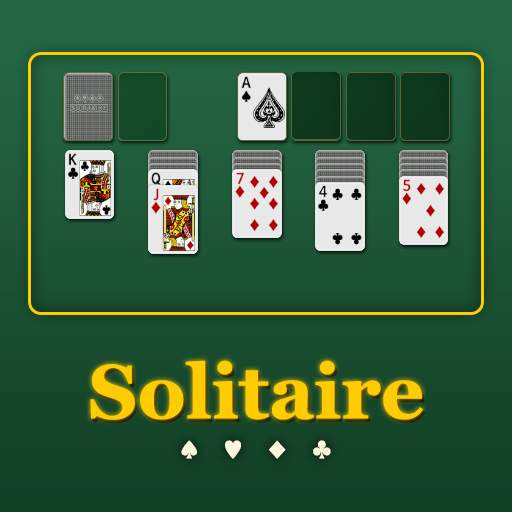
The game is played with a standard 52-card deck (without Jokers). The layout consists of four main areas :
The Tableau: The main playing area composed of seven piles of cards.
The Foundations: Four empty piles, traditionally placed above the tableau, where suits are built up in sequence.
The Stock: The remaining cards, placed face-down, from which you draw.
The Waste (or Talon): A pile where unusable cards from the stock are placed face-up.
To form the tableau, deal seven piles from left to right: the first pile gets one card, the second gets two, and so on, up to seven cards for the final pile. In this setup, only the top card of each pile is face-up; all cards beneath it are dealt face-down .
How to Play Solitaire
The play involves moving cards between the tableau, foundations, and stock. Here is a step-by-step breakdown of the rules:
Building on the Tableau
Cards on the tableau are built in descending order, alternating colors. You can move a face-up card from one tableau pile to another if it is one rank lower and of the opposite color. For example, you can place a red 6 onto a black 7 .
Rules for the Tableau:
An empty tableau pile can only be filled with a King .
You can move multiple cards at once if they form a complete, alternating-color sequence in descending order (e.g., a black Queen on a red King, a red Jack on a black Queen, etc.) .
Whenever a face-down card becomes the top card of a pile, it is automatically turned face-up, making it available for play .
Building the Foundations
Foundations are built in ascending order by suit: starting with the Ace, then 2, 3, 4, etc., ending with the King . As soon as an Ace is available (from the tableau or stock), it should be moved to a foundation pile .
The Stock and Waste Pile
When you can make no more moves on the tableau, draw from the stock to reveal new cards. You can draw one card or three at a time, depending on the variation you’re playing . If the drawn card cannot be played to the tableau or foundations, it is placed face-up on the waste pile, where it remains available for future play .
How to Win
The game ends in one of two ways:
Victory: You successfully move all cards to the foundation piles .
Defeat: You can make no more moves, and no cards remain in the stock.
🧠 Advanced Strategies to Win More Solitaire Games
While Solitaire involves an element of chance, strategic play can significantly improve your odds of winning.
Key Strategies for Success
1. Prioritize Aces and Building Foundations
Always move aces to the foundation piles at the first opportunity . Unlocking these cards early opens up the game. Also, try to build the foundation piles simultaneously rather than focusing on one suit at a time, as this prevents blockages on the tableau .
2. Reveal Face-Down Cards
The primary goal should be to expose as many face-down tableau cards as possible. Moving cards from one tableau to another is critical for accessing the cards underneath . A strategic move that reveals more cards is often better than a move that seems immediately beneficial.
3. Manage Empty Tableau Spaces Carefully
An empty space in the tableau can only be filled with a King . Don’t rush to fill every empty space. Sometimes, it’s better to leave a space open to move a King from a pile, which may then allow you to reveal more face-down cards.
4. Play Slowly and Strategically
Take your time. It’s often beneficial to play a card from the stock onto the waste pile, even if it could be played, if it helps you make a more effective tableau move. Choose the best move, not the first available one .
5. Build Foundations Simultaneously
Building up one suit at a time makes it harder to build sequential runs in the tableau columns. A balanced approach is more effective .
📖 A Brief History of Solitaire: From Patience to Digital Icon
Origins: The Birth of Patience
Card solitaire games, or “Patience,” are believed to have originated near the end of the 18th century, likely in the Baltic region of Europe . This period saw a surge of interest in cartomancy (fortune-telling with cards), and the layout of solitaire games bears a strong resemblance to those used for divination . The earliest known collection of Patience games was published in Russia in 1826 .
The Rise in Popularity
The game became popular in the 19th century, with the first English-language collections appearing in the 1860s . Many of these early books were translations from French or German sources . Lady Adelaide Cadogan’s Illustrated Games of Patience (c. 1870) is considered a pioneering work and went through many editions . By the end of the century, there was a wealth of books on the subject, with significant contributions from authors like Cavendish and Professor Hoffmann .
The Klondike Gold Rush and “Canfield”
The most common version of Solitaire today, Klondike, was likely named after the Klondike gold rush in Canada in the late 1890s . There is also the game of “Canfield,” which was the name of a Saratoga saloon owner who, in the 1890s, would sell players a deck of cards for $50 and pay them $5 for each card they managed to play off .
The Digital Revolution
The advent of the personal computer in the late 20th century gave Solitaire a new lease on life. It was included as a software package in the Microsoft Windows operating system, introducing it to a massive, global audience . This single move cemented Klondike as the most well-known variant and made it a staple of digital gaming .
Solitaire in Pop Culture
The catharsis of Patience has been recognized by many novelists. Charles Dickens represented the character Magwitch as playing “a complicated kind of patience with ragged cards” in Great Expectations (1861) . The game is also mentioned in The Brothers Karamazov by Fyodor Dostoevsky . Even President Franklin Delano Roosevelt was known to relax with a game of Spider Solitaire during moments of crisis .
💻 Playing Solitaire Today: Variations and Digital Platforms
Popular Variations of Solitaire
Over time, hundreds of different solitaire variants have been developed . Some of the most popular are:
Klondike: The classic one-player card game that most people think of when they hear “Solitaire,” popularized by Microsoft Windows .
Spider: Another popular variant, made famous by Windows, where you must build complete descending sequences of the same suit.
FreeCell: A strategic variant where all cards are dealt face-up from the start, making it a game of perfect information. There is no stock pile .
Pyramid: The goal of this Solitaire variant is to clear all cards on the table by making a chain of cards .
Tripeaks: Also known as Triple Peaks, the goal is to clear all cards on the table and from the stock pile .
Where to Play Solitaire
Digital Apps: Solitaire is available on almost every platform, from iOS and Android to computers .
Online: Play for free on websites like Arkadium, which offers Klondike, Tripeaks, and Pyramid .
Physical Cards: The traditional way. The game can be played on a card table with a standard deck .
❓ Frequently Asked Questions About Solitaire
Q: What is the goal of Solitaire?
A: The goal is to move all 52 cards from the tableau and stock into four foundation piles, one for each suit, in ascending order from Ace to King .
Q: What are the four different types of piles in Solitaire?
A: The Tableau (the main playing field), The Foundations (where you build the suits), The Stock (the face-down draw pile), and The Waste (where unplayable stock cards go) .
Q: How do you set up Solitaire?
A: Deal seven piles from left to right. The first pile gets one card, the second gets two, up to the seventh pile, which gets seven cards. Only the top card of each pile is face-up; the rest are face-down .
Q: What can you put in an empty space in the tableau?
A: An empty tableau space can only be filled with a King .
Q: What is the difference between Klondike and Canfield?
A: Klondike is the standard version of Solitaire popularized by Microsoft. Canfield is a different variant named after a 19th-century gambler. In Canfield, the foundations start with a different card and the game has a different layout .
Q: Where did Solitaire originate?
A: Solitaire, known as Patience, is believed to have originated near the end of the 18th century in the Baltic region of Europe, possibly as a form of fortune-telling .
Q: Why is it called Patience?
A: Solitaire is called Patience in England, Poland, and Germany . The name likely comes from the patience required to play the game through to completion.
Q: Is Solitaire a game of luck or skill?
A: Solitaire is a combination of both. The initial shuffle introduces luck, but skillful strategy and careful play can significantly improve your odds of winning .
Q: Can you play Solitaire with other people?
A: Most solitaire games are played alone. However, some variants, such as Spite and Malice, Racing Demon, and Spit, are played competitively by two or more players .
Your Solitaire Journey Begins Here
Solitaire is more than just a game—it’s a journey of strategy, patience, and mental relaxation. From its ancient roots in European fortune-telling to its status as a global digital icon, Solitaire has proven its enduring appeal across centuries. Whether you’re a complete novice learning how to deal the cards, a parent introducing your child to this classic game, or an experienced player seeking to master different variations, the world of Solitaire offers endless opportunities. The game rewards patience, careful planning, and logical thinking. Every game, win or lose, offers lessons to carry forward. Start your Solitaire journey today. Play online, deal a physical deck, or launch an app, and discover the joy of the game that has captivated minds for over 200 years!