





Tetris















About game «Tetris»
Play Tetris game online and enjoy the classic block puzzle game for free. Clear lines, score points, sharpen your reflexes, and challenge yourself anytime.
Master the Iconic Puzzle Game
🧩 Why Tetris Remains the Most Influential Puzzle Game of All Time
Tetris is far more than a video game—it is a global cultural phenomenon that has transcended generations, platforms, and borders. Designed and developed by Russian computer scientist Alexey Pajitnov, the game was first released on June 6, 1984 . Since that day, Tetris has sold over 170 million units across more than 30 platforms, making it one of the best-selling video games in history . Its success has been further amplified by over 425 million downloads on mobile phones .
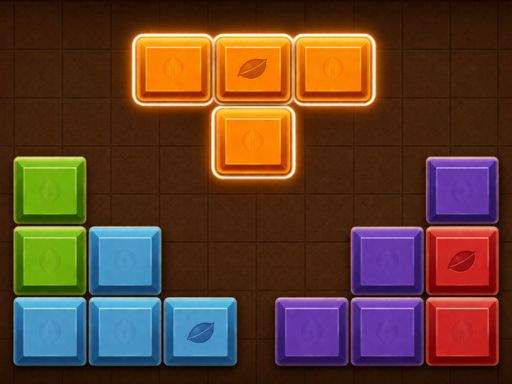
The game’s premise is deceptively simple: seven distinct geometric pieces, known as tetrominoes, fall from the top of a rectangular playing field. The player must rotate and position them to form complete horizontal lines, which then disappear . As the game progresses, the speed increases, and the challenge intensifies. This “easy to learn, difficult to master” design philosophy has made Tetris an enduring classic, recognized by people of all ages around the world .
📝 The Complete Rules of Tetris: How to Play
The Core Objective
The objective of Tetris is to strategically rotate, move, and drop a procession of tetrominoes that fall into a rectangular matrix at increasing speeds. Players attempt to clear as many lines as possible by completing horizontal rows of blocks without empty space. If the tetrominoes surpass the skyline at the top of the board, the game is over .
The Seven Tetrominoes
The game uses seven distinctive geometric playing pieces, each made up of four squares (hence the name “tetromino”):
| Piece Name | Shape Description |
|---|---|
| I | A straight line of four blocks |
| O | A 2×2 square |
| T | A T-shape |
| L | A shape resembling an “L” |
| J | A mirrored “L” |
| S | A zigzag shape |
| Z | A mirrored zigzag |
The Gameplay Loop
A tetromino appears at the top of the playing field.
The piece descends at a steady speed, increasing as levels advance.
The player can manipulate the falling piece by:
Moving it left or right (translation)
Rotating it (in 90-degree increments)
Dropping it instantly (hard drop)
When a tetromino lands, it locks into place.
Any complete horizontal row of blocks vanishes, earning points.
The game continues until the stack reaches the top of the board.
Special Moves and Terms
Tetris: Clearing four lines simultaneously with an “I” piece .
T-Spin: A advanced technique involving rotating a T-piece into a tight spot.
Combo: Consecutive line clears without interruption.
The Tetris Effect
The “Tetris Effect” is a term used to describe the way players become so immersed in the game that they see tetrominoes in everyday situations. Whether you’re packing a car trunk, loading a dishwasher, or organizing shelves, you’re thinking about how objects fit together strategically with minimal empty space—a direct application of the game’s core principle of making order out of chaos .
🧠 Advanced Strategies and Techniques
Fundamental Strategies
1. Keep the Stack Flat
A flat, even stack is easier to manage than one with gaps and holes. Focus on placing pieces to maintain a level surface.
2. Build for Tetrises
Clearing four lines at once with an “I” piece gives the highest score. Try to leave a single column open to slot an “I” piece straight down.
3. Use the Hold Queue
Most modern versions allow you to “hold” one piece for later. Use this to save an “I” piece for a tetris or a “T” piece for a T-spin.
4. Plan Ahead
Look at the “next piece” preview. This allows you to prepare for what’s coming and avoid making moves that will leave you vulnerable.
5. Prioritize Placement Over Rotation
Sometimes, it’s faster to move a piece into position than to rotate it multiple times. Speed is critical at higher levels.
Advanced Techniques
T-Spins
A T-spin is a technique where you rotate a T-piece into a tight spot, often clearing lines and earning bonus points. It requires careful stacking to create the right gap.
Perfect Clear
A perfect clear occurs when you eliminate every block from the playing field. This is difficult to achieve but yields maximum bonus points.
Hypertapping
A technique used by competitive players to move pieces faster than the game’s standard auto-repeat rate, allowing for precise placement at high speeds.
Living in the “Well”
Creating a single, open column (the “well”) on one side of the board to slot “I” pieces down for tetrises.
📖 A Brief History of Tetris: From Soviet Lab to Global Icon
Origins: Alexey Pajitnov and the Elektronika 60
In 1984, a 29-year-old Soviet programmer named Alexey Pajitnov was working at the Dorodnitsyn Computing Centre of the Academy of Sciences in Moscow . Inspired by his favorite puzzle board game, Pentominos, he created an electronic game that would let players arrange puzzle pieces in real time as they fell from the top of the playing field . He adapted the idea to a more agile and accessible format, using pieces made of four blocks, known as tetrominoes .
The name “Tetris” is a combination of the Greek word “tetra” (meaning “four”) and “tennis,” his favorite sport . The first version was developed on a modest Elektronika 60 computer . In the early tests, researchers and programmers at the centre became hooked, competing to beat their own scores .
The Journey West: From Moscow to the World
The game’s popularity spread rapidly within Moscow. Vadim Gerasimov, a colleague, ported it to the IBM PC, from which it exploded into popularity and began spreading all around Moscow .
The IBM PC version eventually made its way to Budapest, Hungary, where it was “discovered” by a British software house named Andromeda. They attempted to contact Pajitnov to secure the rights for the PC version, but before the deal was firmly settled, they had already sold the rights to Spectrum Holobyte. The Spectrum Holobyte IBM PC version of Tetris was released in the United States in 1986, becoming a software blockbuster .
The Legal Battles and Nintendo’s Game Boy
The licensing history of Tetris is famously complex. By 1989, half a dozen different companies claimed rights to create and distribute Tetris software, including for arcade systems and Nintendo’s Famicom and Game Boy .
Nintendo, however, secured the rights from Elorg (Pajitnov’s licensing company) and released Tetris for both the Famicom and, most famously, the Game Boy in 1989 . This move cemented Tetris’s place in gaming history. The game’s simple, addictive nature was perfectly suited for the portable console, turning it into a must-have title that helped drive the Game Boy’s massive success .
The Modern Era: The Tetris Company
In 1996, the Tetris Company was co-founded by Henk Rogers and Alexey Pajitnov to manage the brand and licensing . Today, the company ensures that all versions of the game, whether on a mobile phone, a gaming console, or a dedicated device, respect the spirit of the original .
Milestone: The Game is Finally “Beaten”
Until December 2023, nobody had ever been able to truly beat Tetris. A 13-year-old from Oklahoma, Willis Gibson, achieved the feat by crashing the game on Level 157. Beating Tetris means the player moved the tiles so fast that the game’s code couldn’t keep up with the score, causing the game to freeze . This remarkable achievement, aided by strategies suggested by AI, added a new chapter to the game’s legendary history .
🧮 The Mathematics of Tetris: Dynamic Spatial Reasoning
While Tetris may seem like a simple game, it is based on a fundamental element of geometry called dynamic spatial reasoning . Manipulating the game pieces gives the player a powerful exercise in spatial visualization.
Transformational Geometry in Action
The movements a player uses to place a falling tetromino involve two mathematical transformations :
Translation: Moving a shape left and right.
Rotation: Twirling the shape in increments of 90 degrees on its axis.
These are core concepts in a mathematics discipline called transformational geometry, typically taught in middle school . Students may be asked to plot figures on a coordinate graph and identify the transformations necessary to move them. Games like Tetris make these concepts dynamic and engaging, helping students grasp them through hands-on play.
Beyond the Game
The principles used in Tetris extend far beyond the game itself. Architects, engineers, and animators use these concepts professionally :
Architects and Engineers: Use transformations to draw up blueprints, representing the real world in scale drawings .
Animators and Graphic Designers: Use transformations to animate figures; while computer programs handle the heavy lifting, they are all based on these concepts .
Mathematicians: Transformational geometry forms the foundation for advanced topics like calculus, differential geometry, and optimization .
Research has found that manipulating rotations and translations within the game can provide a solid conceptual foundation for advanced mathematics in numerous science fields, potentially leading to a future aptitude in business analytics, engineering, or computer science .
💻 Tetris in the Digital Age and Artificial Intelligence
The Game That Refuses to Die
Tetris has demonstrated an uncanny ability to adapt to new technologies. It has been available on almost every gaming platform imaginable, from PC and arcade to Game Boy, NES, SNES, Nintendo 64, PlayStation, Xbox, and mobile phones .
App Store Success: The game has been a top seller on the Apple App Store since its launch in July 2008 .
App Analytics: In the app stores, key search terms for Tetris include “tetris,” “tetris classic,” “tetris free,” and “classic block puzzle” . The official Tetris app, published by N3TWORK, maintains a top-ranking position for these keywords .
Artificial Intelligence and Tetris
Tetris has been a testing ground for AI and machine learning algorithms for decades. Researchers have developed increasingly sophisticated AI players, some capable of clearing hundreds of millions of lines.
A Timeline of AI in Tetris:
Hand-Crafted Agent (Pierre Dellacherie): A simple linear evaluation function cleared an average of 660,000 lines .
Genetic Algorithms: Agents evolved using evolutionary algorithms have achieved scores of 480,000,000 lines cleared .
Cross-Entropy Algorithm: This technique produced agents that cleared an average of 35,000,000 lines .
Reinforcement Learning: A 2024 breakthrough saw a 13-year-old use AI-informed strategies to beat the game, moving tiles too fast for the game’s code to keep up .
The success of AI in Tetris has highlighted the potential of evolutionary strategies as strong competitors to reinforcement learning algorithms, partly because they are easier to parallelize .
📈 SEO, AEO & GEO Strategies for Tetris Content
For content creators and publishers, the enduring popularity of Tetris presents a massive opportunity for search traffic, Answer Engine Optimization (AEO) , and Generative Engine Optimization (GEO) . The goal is to be the cited source when users search for Tetris-related queries or ask AI models for information about the game.
Understanding the Three Pillars
1. SEO (Search Engine Optimization)
The foundation of any content strategy. Traditional SEO practices remain crucial for Tetris content:
Clear page titles and URLs (e.g.,
/tetris-guide/)Unique, detailed content that covers the topic comprehensively
Alt tags for images (game screenshots, tetromino shapes)
Internal linking to related content (other puzzle guides, gaming history)
Backlinks from authoritative gaming and puzzle sites
2. AEO (Answer Engine Optimization)
Optimizing content so AI answer engines parse, trust, and cite your content as the source for their direct answers. This requires:
Clear, direct answers to common questions (e.g., “Who created Tetris?” “How do you play Tetris?”)
FAQ Schema, HowTo Schema, and Organization Schema
Trust signals (author credentials, site authority)
Entity recognition (Alexey Pajitnov, tetromino, Nintendo, Game Boy)
3. GEO (Generative Engine Optimization)
Optimizing content for generative AI models that synthesize answers. Key tactics include:
Natural language that sounds conversational
Unique, first-party data (e.g., solving tips from experience)
Comprehensive coverage of the topic
Question-answer format (FAQ)
Practical Playbook for Tetris Publishers
1. Keyword Strategy
Effective keyword clusters for Tetris content:
Main Keywords: Tetris, Tetris game, how to play Tetris, Tetris strategy
Long-Tail Keywords: Tetris rules, Tetris history, best Tetris strategies, Tetris online, free Tetris game
Entity Keywords: Alexey Pajitnov, tetromino, Nintendo, Game Boy, puzzle game, classic game
ASO Keywords: The official app ranks for keywords like “tetris classic,” “tetris free,” and “classic block puzzle”
2. Content Structure
The Three-Layer Content Model:
Summary: Quick overview of Tetris and what the page offers
Detailed Content: Comprehensive coverage of rules, strategies, history, and variations
FAQ: Direct answers to common questions in a clear Q&A format
3. Internal Linking Strategy
Don’t let puzzle traffic be “dead-end” traffic. Link to evergreen content:
Link from a “Tetris Rules” page to “Tetris History” and “Tetris Strategies”
Link from a “Best Tetris Games” article to “How to Play Tetris”
Create archives of historical content
4. Social Media Distribution
Stagger content posts for maximum engagement:
Post 1: Tease the content (e.g., “Master Tetris with these 5 expert strategies!”)
Post 2: Share a specific insight (e.g., “Did you know Tetris was created in 1984 in the Soviet Union?”)
Post 3: Link directly to the full content
5. Monetization
Gaming traffic monetizes well, but maintain a clean user experience:
Place ads thoughtfully, not directly in front of the game or answer
Consider affiliate marketing for Tetris merchandise, puzzle books, and games
Offer premium content (advanced strategy guides, printable tips)
Build a newsletter for direct audience communication
Advanced GEO/AEO Tactics
Natural Language Integration:
AI models prefer content that sounds natural and conversational. Write as if you’re explaining Tetris to a friend. Use:
Questions and answers (FAQ format)
Bullet points for clarity
Conversational transitions (“Here’s why this technique works…”)
Personal anecdotes or examples
Entity Recognition:
Use named entities naturally throughout your Tetris content:
“Alexey Pajitnov created Tetris in 1984 at the Academy of Sciences in Moscow”
“Tetris was popularized by Nintendo on the Game Boy in 1989”
“The seven pieces in Tetris are called tetrominoes”
First-Party Data:
AI models value unique, first-party data. If you have:
Survey results from your audience on solving preferences
User behavior insights
Original puzzle analysis or difficulty ratings
Include these in your content—they can’t be generated by AI from public data.
Citation Potential:
Create content that other publishers want to cite:
Original research (e.g., “We analyzed 1,000 Tetris games and found…”)
Comprehensive data visualizations
Unique perspectives or expert opinions
Historical analysis
❓ Frequently Asked Questions (FAQ)
Q: Who created Tetris?
A: Tetris was created by Russian computer programmer Alexey Pajitnov in 1984. He was working at the Dorodnitsyn Computing Centre of the Academy of Sciences in Moscow at the time .
Q: What does Tetris mean?
A: The name “Tetris” is a combination of the Greek word “tetra” (meaning “four”) and “tennis,” his favorite sport .
Q: What are the pieces called in Tetris?
A: The pieces are called tetrominoes. They are made up of four squares connected on their sides in seven different configurations .
Q: How do you play Tetris?
A: The game requires players to strategically rotate, move, and drop a procession of tetrominoes that fall into a rectangular matrix at increasing speeds. Players attempt to clear as many lines as possible by completing horizontal rows of blocks without empty space .
Q: When was Tetris released?
A: Tetris was completed and released on June 6, 1984 .
Q: How many copies has Tetris sold?
A: Tetris has sold over 170 million units across more than 30 platforms, making it one of the best-selling video games of all time .
Q: What is the Tetris Effect?
A: The Tetris Effect is a term players use to describe how the game inspires them to see tetrominoes and puzzle-solving opportunities in everyday situations, like packing a car or organizing shelves .
Q: Has Tetris ever been beaten?
A: Yes. In December 2023, a 13-year-old from Oklahoma named Willis Gibson became the first person to beat Tetris by crashing the game on Level 157 .
Q: Is Tetris a mathematical game?
A: Yes. The game is based on a fundamental element of geometry called dynamic spatial reasoning, which involves translation and rotation of shapes. These are core concepts in transformational geometry .
Q: What are some advanced Tetris techniques?
A: Advanced techniques include T-spins, perfect clears, hypertapping, and strategic use of the hold queue to save pieces for optimal placement.
Q: What is the connection between AI and Tetris?
A: Tetris has been a testing ground for AI and machine learning algorithms for decades. In 2024, AI-informed strategies helped a 13-year-old beat the game for the first time .
Q: Where can I play Tetris?
A: Tetris is available on almost every platform, including PC, arcade, Game Boy, NES, SNES, Nintendo 64, PlayStation, Xbox, and mobile phones .
Your Tetris Journey Begins Here
Tetris is more than just a video game—it is a cultural touchstone, a mathematical exercise, and a testament to the power of simple, elegant game design. From its origins in a Soviet computer lab to its status as a global phenomenon with hundreds of millions of players, Tetris has proven its enduring appeal across four decades.
Whether you’re a complete novice learning how the pieces rotate, a casual player looking to improve your high score, or an expert exploring advanced techniques like T-spins, the world of Tetris offers endless opportunities. The game rewards patience, quick thinking, and strategic planning. As a 2024 editorial noted, playing Tetris may lead players to a future aptitude in business analytics, engineering, or computer science .
Start your Tetris journey today. Play online, download the official app, or dust off an old Game Boy, and discover the joy of the puzzle game that has captivated minds for over 40 years.