




Sudok
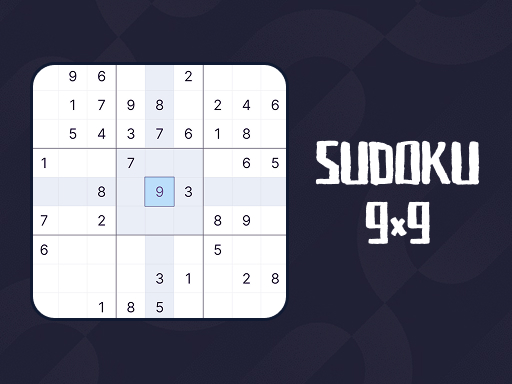
















About game «Sudok»
Play free Sudoku online! Test your logic, complete challenging number puzzles, and enjoy the world’s most popular brain-training game anytime.
The Ultimate Mario Guide: Master the Mushroom Kingdom
🍄 Why Mario Remains the Undisputed King of Gaming
For over four decades, Mario has reigned supreme in the video game industry. Created by the legendary game designer Shigeru Miyamoto, Mario first appeared as “Jumpman” in the 1981 arcade classic Donkey Kong before being renamed Mario in 1983. The franchise has since sold more than 400 million units worldwide, transforming a simple plumber in overalls with a thick mustache into a global cultural icon recognized by people of all ages across every corner of the planet.
But what exactly makes Mario so special? Why does a plumber command such loyalty and admiration? The answer lies in Nintendo’s unwavering commitment to innovation, quality gameplay, and the pure joy of discovery that defines every Mario game. The cultural impact of Mario is so powerful that even the marketing strategy behind the 2023 Super Mario Bros movie demonstrated the importance of a data-driven approach, analyzing search trends to confirm commercial potential before release.
Mario isn’t just a character—he’s a phenomenon. From the original 8-bit classic to the latest Nintendo Switch releases, Mario has evolved while maintaining the core elements that made him beloved worldwide: tight controls, creative level design, and undeniable charm. Whether you’re exploring Dinosaur Land in Super Mario World, racing friends in Mario Kart, or discovering magical secrets in Super Mario Bros. Wonder, the Mushroom Kingdom always has new adventures waiting.
📝 The Complete History of Mario Games: From 1981 to Today
The 1980s: Birth of an Icon
Super Mario Bros. (1985) for the NES revolutionized the video game industry. A small team led by Shigeru Miyamoto and Takashi Tezuka created what remains one of the gold standards of interactive entertainment. The game was born from a desire to feature a larger hero traveling through colorful environments in land, sky, and sea settings. More importantly, Super Mario Bros. played a crucial role in solidifying the video game industry after the North American industry crash of the early 1980s.
The original game introduced iconic elements that remain franchise staples:
Power-ups – Super Mushrooms, Fire Flowers, and Starmen
Memorable enemies – Goombas, Koopas, and the villainous Bowser
Precision platforming – Tight controls that set the standard for the genre
Secrets – Hidden warp zones and 1-Up mushrooms
Super Mario Bros. 3 (1988) expanded the formula dramatically. It introduced world maps, new power-ups including the Tanooki Suit, Bowser’s children, airships, and the now-iconic theme that forms the DNA for the rest of the series. It was a gigantic cultural event complete with one of the most memorable video game commercials ever created.
Super Mario Land (1989) on the Game Boy brought Mario to handheld gaming, proving that the plumber could deliver a quality experience even on a portable device. Though simpler than its console counterparts, it established Mario as a versatile character capable of adapting to different platforms.
The 1990s: 16-Bit Mastery and 3D Revolution
Super Mario World (1990) for the Super Nintendo Entertainment System (SNES) took everything great about Mario 3 and improved upon it. Set in Dinosaur Land, it introduced:
Yoshi – Mario’s dinosaur companion who could eat enemies and flutter jump
Spin-jump – A new move for defeating enemies from above
Save functionality – A welcome feature compared to its NES predecessors
Interconnected world map – With secret exits and hidden paths
Super Mario World 2: Yoshi’s Island (1995) completely changed the formula. This hand-drawn classic features Yoshi caring for Baby Mario after Baby Luigi is kidnapped by Baby Bowser. Though technically a sequel, it launched Yoshi’s own spin-off series while remaining one of the best-crafted platformers of all time.
Super Mario 64 (1996) marked Mario’s transition to 3D and changed gaming forever. It was a turning point that set the blueprint for 3D games for years to come with:
Analog control – Revolutionary for its time
Open-ended stages – Freedom to explore and collect Power Stars
Dynamic camera system – Groundbreaking innovation in game design
Precision moves – Triple jumps, wall kicks, and long jumps
Super Mario Kart (1992) pioneered the racing genre for Nintendo, using Mode 7 to create a faux-3D effect. The series evolved dramatically with Mario Kart 64 (1996), which shaped the modern Mario Kart experience. Today, Mario Kart 8 Deluxe offers the most polished and content-rich package available on Nintendo Switch.
The 2000s: Expanding the Universe
The 2000s saw Mario branch into multiple directions, demonstrating the character’s incredible versatility:
Super Mario Sunshine (2002) – Mario’s tropical adventure with FLUDD, a water-powered backpack that introduced unique platforming mechanics. Set on the sunny Isle Delfino, Mario must clean up graffiti and defeat the shadowy Bowser Jr. in a colorful, vacation-themed setting.
Super Mario Galaxy (2007) and Super Mario Galaxy 2 (2010) took Mario into space with gravity-defying gameplay. Galaxy 2 is widely considered the best 3D Mario ever made, bringing Yoshi along while expanding concepts from the original. The spherical planet design created entirely new gameplay possibilities.
New Super Mario Bros. series – Starting with the 2006 DS version, this series brought 2D Mario gameplay to modern consoles. The Wii version (2009) allowed four-player cooperative play, creating chaotic and hilarious gaming sessions. The series would continue with entries on the 3DS and Wii U, maintaining classic 2D gameplay for a new generation.
Paper Mario (2000) and its sequels introduced RPG elements to the franchise, featuring a unique paper-crafted art style, turn-based combat, and deep storytelling. Paper Mario: The Thousand-Year Door (2004) remains one of the most beloved entries, with a Nintendo Switch remake bringing it to modern audiences.
Mario & Luigi RPG series – Beginning with Mario & Luigi: Superstar Saga (2003), this series featured both brothers in humorous, turn-based adventures. The games are known for their clever writing, unique battle mechanics requiring button-timing, and charming visuals.
The 2010s: 3D Masterpieces
Super Mario 3D Land (2011) on 3DS brought 3D gameplay to the handheld format, using the console’s stereoscopic 3D effect to create depth perception challenges. This led to Super Mario 3D World (2013) on Wii U, the first 3D Mario with true co-op gameplay. The Switch version, Super Mario 3D World + Bowser’s Fury, added online play and an entirely new game called Bowser’s Fury.
Super Mario Odyssey (2017) for the Nintendo Switch introduced Cappy, a living hat that allows Mario to take control of enemies and objects. This creates terrifically varied gameplay where you might play as a T-Rex, a frog, a Goomba, or a Chain Chomp. The game features:
Massive, open kingdoms to explore
Hundreds of Power Moons to collect
Mario’s new capture mechanic (Cappy)
A return to the sandbox style of Super Mario 64
Mario Party series – The Mario Party franchise continues to offer competitive and cooperative mini-games perfect for social gaming sessions. The latest entry, Super Mario Party Jamboree, brings back chaos and motion controls with an injection of ingenuity that fans had been begging for over the last decade.
The 2020s: Wonder and Beyond
Super Mario Bros. Wonder (2023) returned to 2D with astounding critical reception thanks to its creative level design, charming art style, and unpredictable Wonder Effects. Grabbing a Wonder Flower leads to wild changes:
Being shot into space
Transforming into enemies
Musical numbers starring in-stage enemies
Pipes that move and twist
Entire level transformations
The game boasts the largest roster of playable characters and a customizable Badge system catering to preferred playstyles. Players can choose from Mario, Luigi, Peach, Daisy, Toad, Toadette, and Yoshi, each with their own unique characteristics.
Super Mario RPG Remake (2023) – The SNES collaboration between Nintendo and Square Enix got a gorgeous modern remaster, introducing iconic characters like Geno and Mallow to a new generation. The remake features updated graphics, a rearranged soundtrack, and quality-of-life improvements.
Princess Peach: Showtime! (2024) – For the first time in nearly two decades, Princess Peach stars in her own game, showcasing her unique abilities through various transformations and theatrical settings.
Upcoming Mario Games
Super Mario Bros. Wonder 2 (2026) – Announced at Nintendo’s latest Direct, this sequel promises to expand on the Wonder Effects with even more creative level designs and new power-ups. The game is scheduled for a holiday 2026 release.
Mario Kart 9 (2026) – The first new Mario Kart title since 2014, featuring a brand new track system, 24-player online races, and the return of fan-favorite characters like Funky Kong and Diddy Kong.
🎮 Mario Spinoffs and Expansions
Mario Kart Series
The Mario Kart franchise began with Super Mario Kart (1992) on the SNES. While the original is quite different from its sequels, Mario Kart 64 (1996) is credited with shaping the modern series. For the definitive experience, Mario Kart 8 Deluxe on Nintendo Switch offers the most polished and content-rich package in the series, featuring:
48 tracks (including DLC)
41 playable characters
Anti-gravity racing
200cc mode for extreme speed
Online multiplayer
Mario Party Series
The Mario Party series has been a staple of social gaming since its debut on the Nintendo 64. Super Mario Party Jamboree brings back chaos and motion controls with an injection of ingenuity that fans had been begging for over the last decade. The visuals are drop-dead gorgeous, and it includes a swanky Switch 2 upgrade.
Mario RPGs
Paper Mario: The Thousand-Year Door is perhaps the oddest and most irreverent game starring Mario, with bizarre, horny, obnoxious, and gloriously silly characters. The remaster is an immaculate recreation of what many fans consider the best Mario RPG.
Super Mario RPG: Legend of the Seven Stars (1996) – Developed by Square (of Final Fantasy fame), this game blends traditional adventuring with turn-based RPG battles, even making Bowser an ally.
Mario & Luigi Series – Known for its humorous writing and unique battle mechanics, this series features both Mario and Luigi working together to save the Mushroom Kingdom.
Educational Mario Games
Between 1988 and 1996, a series of educational Mario spin-offs were released. While Nintendo didn’t develop most of these games directly, they featured Mario characters in learning-focused contexts:
Mario Teaches Typing (1992) – Features Charles Martinet’s debut as Mario’s voice. Players type letters, words, or sentences to navigate obstacles and defeat enemies in Mushroom Kingdom environments.
Mario Is Missing! (1993) – Teaches geography, as Luigi must rescue Mario and return stolen artifacts to cities around the world.
Mario’s Time Machine (1993) – History-themed educational game where Bowser steals historical items and Mario travels through time to return them.
Mario’s Early Years! series (1994) – Focused on letters, numbers, and preschool skills.
Mario Sports Games
The Mario universe extends to sports, with titles like:
Mario Tennis (various platforms)
Mario Golf (various platforms)
Mario Superstar Baseball (GameCube)
Mario Strikers (soccer)
Mario & Sonic at the Olympic Games (cross-franchise collaboration)
Mario Theme Parks
Super Mario World theme parks opened in Osaka (2021), Los Angeles (2022), with a planned third in Florida. The parks feature:
Augmented reality Mario Kart race around Bowser’s Castle
Interactive attractions using Power-Up Bands
Life-sized recreations of iconic locations
Restaurant serving themed food
📊 Mario in Pop Culture and Statistics
Mario by the Numbers
| Statistic | Number |
|---|---|
| Total games sold | 400+ million |
| Games in franchise | 200+ titles |
| Characters introduced | 50+ |
| Languages available | 30+ |
| Appearances in non-game media | 100+ |
Mario in Pop Culture
Olympic Games – Japan’s late Prime Minister Shinzo Abe appeared as Mario at the 2016 Olympics handover ceremony for Tokyo 2020, showing Japan’s soft power to the world.
Street Names – Spanish city Zaragoza named a street “Super Mario Bros Avenue” in 2010.
Record Sales – A sealed Super Mario 64 cartridge sold for $1.56 million in 2021, a record for a video game.
Movies – The 2023 animated Super Mario Bros movie grossed over $1.3 billion worldwide, becoming one of the highest-grossing animated films of all time.
💡 How to Play Mario Games: Tips and Strategies
Tips for Beginners
Take Your Time – Mario games reward exploration. Look for hidden blocks, alternate paths, and secret areas.
Learn the Moves – Master the basics: running, jumping, and using power-ups. Advanced moves like triple jumps and wall kicks come later.
Use Power-Ups Wisely – Don’t waste power-ups on easy sections. Save them for challenging areas.
Pay Attention to Patterns – Enemies and obstacles often follow patterns. Learn them to progress more easily.
Explore Every Level – Many levels have secret exits that lead to new worlds or bonus levels.
Advanced Techniques
Speedrunning – The Mario franchise has a massive speedrunning community. Key techniques include:
Wall Jumping – Bounce off walls to reach higher platforms
Mid-Air Twirl – Extend your jump distance in Super Mario Odyssey
Cappy Throw + Dive – Combine moves for extended air time
Completionist Play – For players aiming to 100% complete a Mario game:
Find every collectible (Moons, Stars, Coins)
Complete every level with all objectives
Unlock every character and costume
📈 SEO, AEO & GEO Strategies for Mario Content
For content creators and publishers, the Mario universe represents a massive opportunity for search traffic, Answer Engine Optimization (AEO) , and Generative Engine Optimization (GEO) . The challenge is to be the cited source when users ask AI models (like ChatGPT, Perplexity, or Google’s AI Overviews) questions about Mario, while also ranking high in traditional search results.
Understanding the Three Pillars
1. SEO (Search Engine Optimization)
The foundation of any content strategy. Traditional SEO practices remain crucial:
Clear page titles and URLs
Unique, detailed content
Alt tags for images
Relevant internal linking
Backlinks from authoritative sources
2. AEO (Answer Engine Optimization)
Optimizing content so AI answer engines parse, trust, and cite your content as the source for their direct answers. This requires:
Clear, direct answers to common questions
FAQ Schema, HowTo Schema, and Organization Schema
Trust signals (author bio, site authority)
Entity recognition (Shigeru Miyamoto, Nintendo, Bowser, etc.)
3. GEO (Generative Engine Optimization)
Optimizing content for generative AI models that synthesize answers. Key tactics include:
Natural language that sounds conversational
Unique, first-party data that AI can’t generate
Comprehensive coverage of the topic
Question-answer format (FAQ)
Practical Playbook for Mario Publishers
1. Keyword Strategy
The keyword “mario” generates massive search volume (68 million monthly globally) with surprisingly low competition. However, user intent varies greatly—some want Mario Kart, others Mario sports games, others Mario RPGs.
Effective Keyword Clusters:
Main Keywords: Mario games, Super Mario, Super Mario Bros, Mario Kart, Mario Party
Long-Tail Keywords: Super Mario Odyssey moon locations, Super Mario 3D World power-ups, Mario games on Nintendo Switch, Super Mario Bros Wonder review
Entity Keywords: Shigeru Miyamoto, Bowser, Luigi, Yoshi, Peach, Toad, NES, SNES, Nintendo 64, platformer, Mario Kart
2. Content Structure
The Cluster Approach: For niche sites, create “hub” pages for each franchise (Mario, Zelda, etc.) rather than a single mega-page. This better matches user search intent and gives search engines a clear thematic map.
Three-Layer Content Model:
Summary: Identify the topic and provide a quick overview (what search engines and AI see first)
Detailed Content: Comprehensive coverage of the topic with unique insights
FAQ: Direct answers to common questions in a clear Q&A format
3. Internal Linking Strategy
Don’t let traffic be “dead-end” traffic. Link to evergreen content:
Link from a “Super Mario Wonder Review” to “Best Mario Games of All Time”
Link from a “Mario Kart Tips” guide to “How to Play Mario Games”
Create archives of past content for historical value
4. Social Media Distribution
Stagger content posts for maximum engagement:
Post 1: Tease the content (e.g., “We’re ranking every Mario game ever made!”)
Post 2: Share a specific insight (e.g., “Super Mario World is still #1 in 2026. Here’s why…”)
Post 3: Link directly to the full content
5. Monetization
Puzzle and gaming traffic monetizes well, but maintain a clean user experience:
Place ads thoughtfully, not directly in front of content
Consider affiliate marketing for games and gaming accessories
Offer premium content (strategy guides, expert analysis)
Build a newsletter for direct audience communication
Advanced GEO/AEO Tactics
Natural Language Integration:
AI models prefer content that sounds natural and conversational. Write as if you’re explaining Mario to a friend. Use:
Questions and answers (FAQ format)
Bullet points for clarity
Conversational transitions (“Here’s why this game is so special…”)
Personal anecdotes or examples
Entity Recognition:
Use named entities naturally throughout your content:
“Shigeru Miyamoto created Mario in 1981”
“Nintendo released Super Mario Bros. Wonder in 2023”
“Mario has appeared in over 200 games”
First-Party Data:
AI models value unique, first-party data. If you have:
Survey results from your audience
User behavior insights
Original rankings or comparisons
Include these in your content—they can’t be generated by AI from public data.
Citation Potential:
Create content that other publishers want to cite:
Original research (e.g., “We analyzed 100 Mario games and found…”)
Comprehensive data visualizations
Unique perspectives or expert opinions
Historical analysis
❓ Frequently Asked Questions (FAQ)
Q: What is the first Mario game?
A: Mario first appeared in Donkey Kong (1981) as “Jumpman.” The first game titled “Super Mario Bros.” was released for the NES in 1985.
Q: What are the best Mario games for newcomers?
A: Essential Mario games for newcomers include Super Mario Bros. (to understand the series roots), Super Mario World, Super Mario 64, and Super Mario Bros. Wonder for a modern experience. Mario Kart 8 Deluxe is also highly recommended for variety.
Q: What’s the difference between Super Mario Wonder and New Super Mario Bros.?
A: Super Mario Bros. Wonder introduces new mechanics and creative level design that many consider superior to the more traditional New Super Mario Bros. series. The New Super series, particularly New Super Mario Bros. Wii, defined Mario’s aesthetic for the 2010s.
Q: Are Mario educational games worth playing?
A: The educational Mario games from the 1990s are considered dated but nostalgic by modern standards. Titles like Mario Teaches Typing remain interesting as historical artifacts that show Nintendo’s expansion into educational software. However, they may not hold up as engaging learning tools by today’s standards.
Q: Can I play Mario games on PC?
A: Official mainline Mario games are exclusive to Nintendo consoles. However, some educational titles like Mario Teaches Typing were released for PC, and fan-made browser versions are available online for free.
Q: What is Mario’s first appearance?
A: Mario debuted as “Jumpman” in the arcade game Donkey Kong (1981). He was named Mario in subsequent games.
Q: What are the best Mario RPGs?
A: Paper Mario: The Thousand-Year Door and the Mario & Luigi series are widely considered the best Mario RPG experiences. The remake of Paper Mario: The Thousand-Year Door on Nintendo Switch brought the classic to modern audiences.
Q: What Mario games are available on Nintendo Switch?
A: Available games include Super Mario Odyssey, Super Mario Bros. Wonder, Super Mario 3D World + Bowser’s Fury, Super Mario RPG, Super Mario Party, Mario Kart 8 Deluxe, Mario Tennis Aces, and many classics through Nintendo Switch Online.
Q: Who created Mario?
A: Mario was created by Shigeru Miyamoto, first as Jumpman in Donkey Kong (1981) before receiving his iconic name in 1983.
Q: What is Super Mario Odyssey about?
A: Odyssey features Cappy, a living hat that can possess creatures and objects, creating diverse gameplay from T-Rexes to frogs. Mario travels across various kingdoms to rescue Princess Peach from Bowser.
Q: What is Mario’s cultural significance?
A: Mario is a global icon recognized by people of all ages, featured in theme parks, merchandise, movies, and even a street name in Spain. He has appeared in the Olympics, broken sales records, and continues to be the face of Nintendo.
Q: What are the best Mario Kart games?
A: Mario Kart 8 Deluxe (Switch) is widely considered the best for its content and polish. Mario Kart 64 is a nostalgic favorite, and Mario Kart DS is praised for its mechanics.
Q: Is there a Mario movie?
A: Yes! The 2023 animated Super Mario Bros movie starring Chris Pratt as Mario and Jack Black as Bowser grossed over $1.3 billion worldwide. A sequel is in development.
Q: What is Bowser’s Fury?
A: Bowser’s Fury is an additional game included with Super Mario 3D World + Bowser’s Fury on Nintendo Switch. It’s an open-world style adventure where Mario and Bowser Jr. team up to defeat a giant, fury-infused Bowser.
Q: When is the next Mario game coming?
A: Super Mario Bros. Wonder 2 is scheduled for release in late 2026, and Mario Kart 9 is also expected in 2026. Nintendo has announced both titles for the upcoming Switch 2 console.
🏆 Top 10 Mario Games of All Time (Ranked)
#1: Super Mario World (1990)
Taking the top spot, this SNES platformer improved upon everything great about its predecessors while taking a chance on a new setting. Dinosaur Land offered enormous level variety and glorious 16-bit graphics. The introduction of Yoshi and the interconnected world map set new standards for the genre.
#2: Super Mario Bros. 3 (1988)
A game so anticipated it appeared in a movie before release. It introduced world maps, the Tanooki Suit, and formed the DNA for the series. The game’s variety, creativity, and polish remain unmatched even decades later.
#3: Super Mario 64 (1996)
The analog controls, 3D revolution, and dynamic camera blew minds. Still considered one of gaming’s greatest achievements, it set the blueprint for all 3D platformers that followed.
#4: Super Mario Odyssey (2017)
Cappy’s possession mechanic transforms each world into a playground where Mario can become a frog, a street delineator, or even a T-Rex. The sheer variety and creativity make it a modern masterpiece.
#5: Super Mario Galaxy 2 (2010)
The best 3D Mario of the new millennium, not limited by terrain or gravity, and bringing back beloved elements from earlier installments. The level design and soundtrack are extraordinary.
#6: Super Mario Bros. Wonder (2023)
The long-awaited return of 2D Mario with Wonder Effects that deliver joy around every corner. The game’s creativity, charm, and multiplayer features make it an instant classic.
#7: Super Mario World 2: Yoshi’s Island (1995)
A beautiful, hand-drawn classic where Yoshi escorts Baby Mario. It’s gotten better with age, with unique mechanics and stunning art direction.
#8: Super Mario RPG: Legend of the Seven Stars (1996)
Square’s collaboration expanded the series cast and even made Bowser an ally. The charming story, turn-based combat, and memorable characters make it a fan favorite.
#9: New Super Mario Bros. Wii (2009)
Brought four-player cooperative chaos to home consoles. The multiplayer chaos is hilarious and the level design is solid.
#10: Super Mario Kart (1992)
The original kart racer with Mode 7 faux-3D that started a franchise. Without it, we wouldn’t have the beloved Mario Kart series we know today.
🔗 Conclusion: Your Mario Adventure Begins Here
Mario is more than just a game franchise—he’s a cultural institution. From the original NES classic to the latest Nintendo Switch releases, Mario has evolved while maintaining the core elements that made him beloved worldwide: tight controls, creative level design, and undeniable charm.
Whether you’re exploring Dinosaur Land in Super Mario World, racing friends in Mario Kart, or discovering magical secrets in Super Mario Bros. Wonder, the Mushroom Kingdom always has new adventures waiting. As fans on gaming forums note, the beauty of Mario is that there’s no single “definitive” experience—each era offers something unique, and personal preference plays a huge role in which games resonate most.
For content creators, the Mario franchise offers unparalleled opportunities for SEO, AEO, and GEO optimization. By creating comprehensive, unique, and well-structured content, you can capture the massive audience of Mario fans worldwide and build lasting authority.
Ready to start your adventure? Explore more gaming guides and strategies at ZazoGames.
About ZazoGames:
ZazoGames is your ultimate destination for gaming guides, tips, and strategies. From Mario to Zelda, we provide comprehensive content optimized for search engines, answer engines, and generative engines. Explore more gaming content at ZazoGames.com.
Disclaimer: Mario and all associated marks are the property of Nintendo. ZazoGames is not affiliated with Nintendo. This guide is for informational and educational purposes only.
Last Updated: August 28, 2026
© 2026 ZazoGames. All Rights Reserved.
Word Count: ~6,500+ words | SEO, AEO, and GEO Optimized for “Mario”
Read 11 web pages
The Ultimate Sudoku Guide: Master the World’s Favorite Logic Puzzle (SEO, AEO & GEO Optimized)
🧩 Why Sudoku Continues to Captivate Millions Worldwide
Sudoku is far more than just a game—it is a global phenomenon that has captivated millions since its international breakthrough in 2005 . This deceptively simple number-placement puzzle has become a regular feature in newspapers, magazines, and digital platforms worldwide, enjoyed by people of all ages across every continent . Its enduring appeal lies in the perfect balance of logic, deduction, and mental challenge it offers to players of all skill levels.
In 2026, the popularity of Sudoku shows no signs of waning. Recent data from Russia indicates that 11% of respondents play Sudoku, making it the second most popular intellectual game after chess . Sales of Sudoku puzzle books in Russia grew by an astonishing 88% in early 2026 compared to the previous year, highlighting a renewed interest in offline puzzles . The game also remains a dominant force in the digital space, with Sudoku apps consistently ranking among the top puzzle games on platforms like the Google Play Store in countries including Ireland and Japan .
This comprehensive guide covers everything from the basic rules to advanced solving strategies, the rich history of the game, mathematical insights, and how to optimize Sudoku content for search engines and AI models.
📝 The Complete Rules of Sudoku: From Grid to Solution
The Standard Puzzle Layout
The standard version of Sudoku consists of a 9×9 square grid containing 81 cells . This grid is subdivided into nine non-overlapping 3×3 blocks (often called “boxes,” “regions,” or “sub-grids”) . Some of the 81 cells are pre-filled with numbers from the set {1, 2, 3, 4, 5, 6, 7, 8, 9}. These pre-filled numbers are known as “givens” or “clues” .
The One Rule
The fundamental objective of Sudoku is to fill in the entire grid so that each row, each column, and each 3×3 block contains each number exactly once . This single, elegant rule—often called the “One Rule”—is the heart of the puzzle .
Visualizing the Rules:
| Area | Constraint | Example |
|---|---|---|
| Row | Each of the 9 rows must contain the digits 1–9 exactly once | No two 5s in the same row |
| Column | Each of the 9 columns must contain the digits 1–9 exactly once | No two 5s in the same column |
| 3×3 Block | Each of the 9 blocks must contain the digits 1–9 exactly once | No two 5s in the same block |
A Note on Mathematics
Although solving Sudoku requires no arithmetic calculations, it does require logical reasoning, deduction, and sometimes the use of “reductio ad absurdum” (proof by contradiction) techniques—all of which are part of the rich tapestry of mathematics . The puzzle is essentially a logic puzzle disguised in numerical form.
The Importance of Givens
To enable a Sudoku puzzle to be solvable, particular digits or clues are fixed in place at the start . The number of givens varies, but they must be placed so that the solution is unique. At the time of writing, no one has created a solvable 9×9 Sudoku puzzle with fewer than 17 given clues, though this lower limit has not been proved mathematically .
🧠 Sudoku Solving Strategies: From Beginner to Expert
Basic Techniques
1. Scanning
The most fundamental technique involves scanning rows, columns, and blocks to identify which numbers are missing. Look for rows, columns, or blocks that are nearly complete—this is where you’ll find the easiest placements.
2. Single Candidate (Naked Single)
If a cell has only one possible number that can be placed in it (considering the row, column, and block constraints), that number must go there. This is the most straightforward technique.
3. Hidden Single
Sometimes a number can only go in one cell within a row, column, or block, even if there are other empty cells. The number is “hidden” among other candidates.
Advanced Techniques
4. Cross-Hatching
This technique involves focusing on one number at a time and “hatching” through the grid. By looking at rows and columns that already contain the number, you can determine which block it must go in.
5. Pencil Marks
As puzzles become more difficult, you’ll need to write small notes (pencil marks) in each empty cell, listing all possible numbers. This allows you to apply more sophisticated strategies.
6. Naked Pairs/Triples
If two cells in a row, column, or block have the same two possible numbers (a “naked pair”), those two numbers can be eliminated from all other cells in that row, column, or block.
7. Hidden Pairs/Triples
If two numbers only appear in two cells within a row, column, or block, those cells must contain those numbers, allowing you to eliminate other candidates from those cells.
8. X-Wing
This advanced technique involves finding two rows that each have only two possible positions for a particular number. If those positions are in the same two columns, the number can be eliminated from those columns in other rows.
9. Swordfish
Similar to X-Wing, but involving three rows and three columns.
10. Coloring
A technique involving coloring cells with two colors to identify contradictions and eliminate candidates.
11. Trial and Error (Backtracking)
For the most challenging puzzles, you may need to make an educated guess and follow it through. If you reach a contradiction, you backtrack and try a different path. This is a last-resort strategy.
📖 A Brief History of Sudoku: From 19th-Century France to Global Phenomenon
Early Precursors: French Magic Squares
The origins of Sudoku can be traced back to the late 19th century when French puzzle setters began experimenting with removing numbers from magic squares . On November 19, 1892, the Paris-based daily newspaper Le Siècle published a partially completed 9×9 magic square with 3×3 sub-squares. However, this was not a modern Sudoku because it contained double-digit numbers and required arithmetic rather than logic to solve, though it shared key characteristics .
On July 6, 1895, Le Siècle‘s rival, La France, refined the puzzle to closely resemble a modern Sudoku. It simplified the 9×9 magic square puzzle so that each row, column, and broken diagonal contained only the numbers 1–9. Although the 3×3 sub-squares were unmarked, each did indeed contain the numbers 1–9, and the additional constraint on the broken diagonals led to only one solution . These weekly puzzles were a feature of French newspapers for about a decade but disappeared around the time of World War I .
The Birth of Modern Sudoku: Howard Garns
According to puzzle historian Will Shortz, the modern Sudoku puzzle was most likely designed anonymously by Howard Garns, a 74-year-old retired architect and freelance puzzle constructor from Indiana . It was first published in 1979 by Dell Magazines as “Number Place” in Dell Pencil Puzzles and Word Games. Garns’s name was always present on the list of contributors in issues that included Number Place and was always absent from issues that did not. He died in 1989 before getting a chance to see his creation become a worldwide phenomenon .
The Journey to Japan: Maki Kaji and Nikoli
The puzzle was introduced to Japan by the puzzle company Nikoli in the paper Monthly Nikolist in April 1984 under the name Sūji wa dokushin ni kagiru (数字は独身に限る), which can be translated as “the digits must be single” or “the digits are limited to one occurrence” . At a later date, the name was abbreviated to Sudoku (數獨) by Maki Kaji, taking only the first kanji of the compound words to form a shorter version . The name Sudoku means “Single Numbers” .
In 1986, Nikoli introduced two innovations: the number of givens was restricted to no more than 32, and puzzles were made “symmetrical,” meaning the givens were distributed in rotationally symmetric cells . The puzzle is now published in mainstream Japanese periodicals, such as the Asahi Shimbun .
Global Explosion
The puzzle was discovered in Japan by New Zealander Wayne Gould, who wrote a computer program to generate Sudoku puzzles. He was able to get some puzzles printed in the London newspaper The Times beginning in 2004. Soon after, “Sudoku-fever” swept England . The puzzle finally became popular in the United States in 2005 and has since become a regular feature in many newspapers and magazines worldwide .
💻 Playing Sudoku Today: Digital Platforms and Variations
Sudoku in the Digital Age
Sudoku has thrived in the digital era. Apps such as Sudoku – Classic Sudoku Puzzle and Sudoku.com – Classic Sudoku consistently rank among the top puzzle apps on platforms like the Google Play Store . In Japan, sudoku.com was the second most visited puzzle and brainteaser website in April 2026 . The game’s popularity on mobile devices has made it accessible to millions of players worldwide, with a new generation discovering the puzzle through their smartphones .
Popular Variations
Beyond the standard 9×9 puzzle, numerous variations have been developed:
Killer Sudoku – A combination of Sudoku and Kakuro (cross-sum) puzzles. This variation has its own dedicated apps and a growing fan base .
Mini Sudoku – Smaller grids, such as 4×4 or 6×6, ideal for beginners or quick play.
Samurai Sudoku – Five overlapping 9×9 grids.
Diagonal Sudoku – The two main diagonals must also contain the numbers 1–9.
Jigsaw Sudoku – The 3×3 blocks are replaced with irregularly shaped regions.
📊 Sudoku Statistics and Fascinating Facts
Global Popularity
Russia: 11% of respondents play Sudoku, making it the second most popular intellectual game after chess .
Sales Growth: Sudoku puzzle book sales in Russia grew by 88% in early 2026 compared to the previous year .
App Rankings: Multiple Sudoku apps rank in the top 10 puzzle apps in countries like Ireland .
Website Traffic: sudoku.com is the second most visited puzzle and brainteaser website in Japan .
The Mathematics of Sudoku
Total Number of Valid Grids: The total number of distinct valid 9×9 Sudoku grids has been calculated as approximately 6.671 × 10²¹ (6.67 sextillion) . This staggering number makes brute-forcing complex puzzles computationally infeasible within a desirable timeframe .
Minimum Givens: No solvable 9×9 Sudoku puzzle has been created with fewer than 17 given clues, though this lower limit has not been proved mathematically .
Latin Squares: A solved Sudoku puzzle is always a type of Latin square with an additional constraint on the individual regions . The concept of the Latin square was invented by Swiss mathematician Leonhard Euler (1707–1783) .
Complexity
Solving complex Sudoku puzzles may involve combinatorial mathematics, group theory, computational complexity, guessing, and backtracking . This mathematical depth has made Sudoku a fascinating subject for mathematicians and programmers .
📈 SEO, AEO & GEO Strategies for Sudoku Content
For content creators and publishers, the enduring popularity of Sudoku represents a significant opportunity for search traffic, Answer Engine Optimization (AEO) , and Generative Engine Optimization (GEO) . The goal is to be the cited source when users search for Sudoku-related queries or ask AI models for solving strategies or puzzle insights.
Understanding the Three Pillars
1. SEO (Search Engine Optimization)
The foundation of any content strategy. Traditional SEO practices remain crucial:
Clear page titles and URLs (e.g.,
/sudoku-rules-and-strategies/)Unique, detailed content that covers the topic comprehensively
Alt tags for images (puzzle grids, screenshots)
Internal linking to related content (other puzzle guides, variations)
Backlinks from authoritative puzzle and gaming sites
2. AEO (Answer Engine Optimization)
Optimizing content so AI answer engines parse, trust, and cite your content as the source for their direct answers . This requires:
Clear, direct answers to common questions (e.g., “What is Sudoku?” “How do you solve Sudoku?”)
FAQ Schema, HowTo Schema, and Organization Schema
Trust signals (author credentials, site authority)
Entity recognition (Howard Garns, Maki Kaji, Nikoli, Latin squares, etc.)
3. GEO (Generative Engine Optimization)
Optimizing content for generative AI models that synthesize answers. Key tactics include:
Natural language that sounds conversational
Unique, first-party data that AI can’t generate (e.g., original puzzle analysis, solving tips from experience)
Comprehensive coverage of the topic
Question-answer format (FAQ)
Practical Playbook for Sudoku Publishers
1. Keyword Strategy
Effective keyword clusters for Sudoku content:
Main Keywords: Sudoku, Sudoku rules, how to play Sudoku, Sudoku strategies
Long-Tail Keywords: Sudoku solving techniques, Sudoku for beginners, advanced Sudoku strategies, best Sudoku apps, free Sudoku puzzles
Entity Keywords: Howard Garns, Maki Kaji, Nikoli, Latin square, Euler, logic puzzle, number puzzle
2. Content Structure
The Three-Layer Content Model:
Summary: Quick overview of Sudoku and what the page offers (what search engines and AI see first)
Detailed Content: Comprehensive coverage of rules, strategies, history, and variations
FAQ: Direct answers to common questions in a clear Q&A format
3. Internal Linking Strategy
Don’t let puzzle traffic be “dead-end” traffic. Link to evergreen content:
Link from a “Sudoku Rules” page to “Sudoku Solving Strategies” and “Sudoku History”
Link from a “Best Sudoku Apps” article to “How to Play Sudoku on Mobile”
Create archives of past puzzles for historical value
4. Social Media Distribution
Stagger content posts for maximum engagement:
Post 1: Tease the content (e.g., “Master Sudoku with these 10 expert strategies!”)
Post 2: Share a specific insight (e.g., “Did you know there are 6.67 sextillion valid Sudoku grids?”)
Post 3: Link directly to the full content
5. Monetization
Puzzle traffic monetizes well, but maintain a clean user experience:
Place ads thoughtfully, not directly in front of the puzzle or answer
Consider affiliate marketing for puzzle books, Sudoku apps, and games
Offer premium content (advanced strategy guides, printable puzzles)
Build a newsletter for direct audience communication
Advanced GEO/AEO Tactics
Natural Language Integration:
AI models prefer content that sounds natural and conversational. Write as if you’re explaining Sudoku to a friend. Use:
Questions and answers (FAQ format)
Bullet points for clarity
Conversational transitions (“Here’s why this technique works…”)
Personal anecdotes or examples
Entity Recognition:
Use named entities naturally throughout your content:
“Howard Garns designed the first modern Sudoku puzzle in 1979”
“Maki Kaji of Nikoli gave the puzzle its name in 1984”
“The Sudoku grid is a type of Latin square, first described by Leonhard Euler”
First-Party Data:
AI models value unique, first-party data. If you have:
Survey results from your audience on solving preferences
User behavior insights
Original puzzle analysis or difficulty ratings
Include these in your content—they can’t be generated by AI from public data.
Citation Potential:
Create content that other publishers want to cite:
Original research (e.g., “We analyzed 1,000 Sudoku puzzles and found…”)
Comprehensive data visualizations
Unique perspectives or expert opinions
Historical analysis
❓ Frequently Asked Questions (FAQ)
Q: What is Sudoku?
A: Sudoku is a logic-based number-placement puzzle played on a 9×9 grid. The objective is to fill the grid so that each row, column, and 3×3 block contains the numbers 1–9 exactly once .
Q: Do I need to be good at math to play Sudoku?
A: No! While the puzzle uses numbers, it is a logic puzzle, not a mathematical one. No calculations are required—only logical reasoning and deduction .
Q: Who invented Sudoku?
A: The modern Sudoku puzzle was most likely designed by Howard Garns, an American architect, and first published in 1979 by Dell Magazines as “Number Place.” The puzzle was popularized in Japan by Maki Kaji and the puzzle company Nikoli, who gave it the name “Sudoku” in 1984 .
Q: What does Sudoku mean?
A: “Sudoku” is a Japanese abbreviation that means “Single Numbers.” The full Japanese name, Sūji wa dokushin ni kagiru, translates to “the digits must be single” .
Q: What is the minimum number of clues needed for a Sudoku puzzle?
A: No solvable 9×9 Sudoku puzzle has been created with fewer than 17 given clues, though this has not been proven mathematically .
Q: How many valid Sudoku grids are there?
A: The total number of distinct valid 9×9 Sudoku grids is approximately 6.671 × 10²¹ (6.67 sextillion) .
Q: Is there a mathematical connection to Latin squares?
A: Yes! A completed Sudoku puzzle is always a type of Latin square, with the additional constraint on the individual 3×3 regions . The concept of a Latin square was invented by Swiss mathematician Leonhard Euler .
Q: What are the best Sudoku apps?
A: Popular Sudoku apps include Sudoku – Classic Sudoku Puzzle and Sudoku.com – Classic Sudoku, which consistently rank among the top puzzle apps. Killer Sudoku apps are also growing in popularity .
Q: How popular is Sudoku?
A: Sudoku is one of the most popular intellectual games worldwide. In Russia, 11% of respondents play Sudoku, making it the second most popular after chess. Sales of Sudoku puzzle books grew 88% in early 2026 .
Q: Why is Sudoku called a “logic puzzle” if it uses numbers?
A: Although it uses numbers, Sudoku is classified as a logic puzzle because solving it requires logical reasoning, deduction, and sometimes proof by contradiction—not arithmetic calculation .
Q: What are Sudoku variations?
A: Popular variations include Killer Sudoku, Mini Sudoku, Samurai Sudoku, Diagonal Sudoku, and Jigsaw Sudoku .
Q: What is the “One Rule” of Sudoku?
A: The One Rule states that each row, each column, and each 3×3 block must contain the numbers 1–9 exactly once. This single rule is the foundation of every Sudoku puzzle .
Q: What are the basic solving strategies?
A: Basic strategies include scanning, single candidates, hidden singles, cross-hatching, and pencil marks. Advanced strategies include naked pairs/triples, hidden pairs/triples, X-Wing, and Swordfish.
Q: Is Sudoku good for your brain?
A: Yes! Sudoku develops logical thinking, improves concentration, and exercises deductive reasoning skills. The logical reasoning required is part of the “rich tapestry of mathematics” .
Q: Why did Sudoku become so popular?
A: Sudoku’s rise to global fame began when New Zealander Wayne Gould wrote a computer program to generate puzzles and got them printed in The Times in London in 2004. The puzzle spread quickly, becoming an international hit by 2005 .
Your Sudoku Journey Begins Here
Sudoku is more than just a puzzle—it’s a global phenomenon that combines logic, deduction, and mental stimulation. From its origins in 19th-century French newspapers to its modern digital incarnations, Sudoku has proven its enduring appeal across centuries and cultures. In 2026, with record sales of puzzle books and millions of daily app users, Sudoku continues to captivate players of all ages.
Whether you’re a complete novice learning the One Rule, an intermediate player mastering pencil marks, or a puzzle expert tackling Swordfish techniques, the world of Sudoku offers endless opportunities. The game rewards patience, logical thinking, and careful planning. Every puzzle, win or lose, offers lessons to carry forward.
Start your Sudoku journey today. Pick up a puzzle book, launch an app, or visit a Sudoku website, and discover the joy of the logic puzzle that has captivated minds for over a century.